| Menu |
Biometrics |
Rfid Chips |
National Id Cards |
Fascism, 666, And The Antichrist |
What's Next
|
|
Electronic surveillance: it's everywhere and it's growing.
170 surveillance cameras on one block! NYC now Camera City. In 2005, the NYCLU counted more than 4,000 street level cameras from the West Village down to Battery Park. The group also found that the 292 cameras along 125th Street in Central Harlem recorded nearly every movement on that busy street. "I would believe the number has dramatically increased" three years later, said Matt Faiella, staff attorney for the NYCLU. The cameras have myriad uses. The NYPD wants to install thousands to protect the city against terrorism. The NYPD's recently released plan to protect the city by installing some 3,000 additional cameras in the city raised concern at the NYCLU because it takes a new step in surveillance by creating a database of license plates and people's movements. The police said the images, including license plate captures, would be erased after 30 days. Because they're continually making new discoveries to increase the effectiveness of surveillance cameras, biometrics, rfid chips, etc., the government may soon be tracking us all.
|

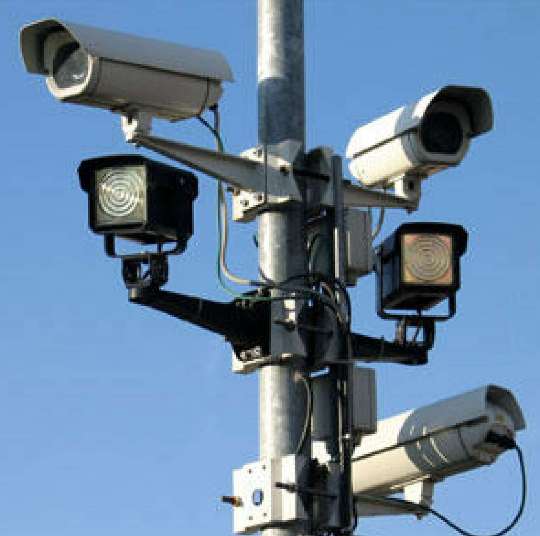 Surveillance cameras mounted on top of a steel pole.
|
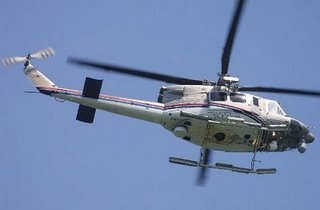 According to the NYPD, you won't even recognize that it's
there, but high above the heads of New York City's citizens,
there is a $10 million special NYPD helicopter with an
impressive arsenal of surveillance equipment inside it. The
chopper, called 23, looks like plain helicopter on the outside, but on the inside it is chock-full of hi-tech gadgetry.
| |
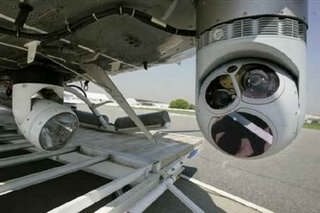
The helicopter's surveillance
cameras, including one for infrared photography, are
mounted below the aircraft. The chopper's arsenal of
sophisticated surveillance and tracking equipment is
powerful enough to stealthily read license plates - or even
pedestrian's faces - from high above.
|
The helicopter's surveillance system can beam live footage to police command centers or even to wireless hand-held devices.
Without leaving Manhattan airspace, the chopper also was able to get a crystal-clear picture of jetliners waiting to take off from LaGuardia Airport and to survey Kennedy International Airport's jet fuel lines.
The helicopter is just part of the department's efforts to adopt cutting-edge technology for its counterterrorism operations. The NYPD also plans to spend tens of millions of dollars strengthening security in the lower Manhattan business district with a network of closed-circuit television cameras and license-plate readers posted at bridges, tunnels and other entry points.
|
The Illuminati And The Freemasons
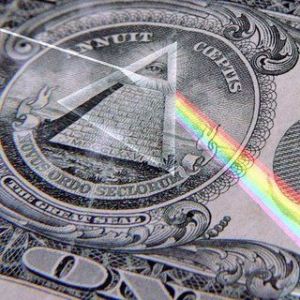
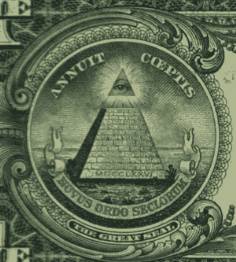 The Eye In The Pyramid. The eye in the pyramid has been adopted by many different esoteric entities throughout history, including the eye of Horus (Osiris) in Egypt, and the All-Seeing Eye in Freemasonry. It also famously appears on the back of the U.S. dollar bill. Henry Wallace, who was instrumental in having the seal placed on the dollar bill in 1935, had deep occult connections. It was a symbol of secret societies in Europe long before anyone heard of the United States and it is awash with Freemasonic and secret society symbolism going back to the ancient world. Adepts believe that when the capstone, the symbol of the secret societies, is lowered onto the top of the incomplete Pyramid, the Plan of the ages will be complete, the Novus Ordo Seclorum will be established, and the world ruler will be installed. The Eye In The Pyramid. The eye in the pyramid has been adopted by many different esoteric entities throughout history, including the eye of Horus (Osiris) in Egypt, and the All-Seeing Eye in Freemasonry. It also famously appears on the back of the U.S. dollar bill. Henry Wallace, who was instrumental in having the seal placed on the dollar bill in 1935, had deep occult connections. It was a symbol of secret societies in Europe long before anyone heard of the United States and it is awash with Freemasonic and secret society symbolism going back to the ancient world. Adepts believe that when the capstone, the symbol of the secret societies, is lowered onto the top of the incomplete Pyramid, the Plan of the ages will be complete, the Novus Ordo Seclorum will be established, and the world ruler will be installed.
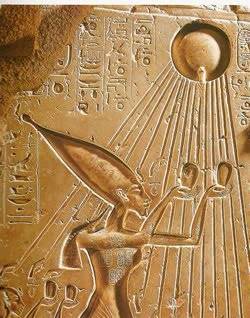
Sun Worship. "... His [Osiris] power was symbolized by an Eye over a Sceptre. The Sun was termed by the Greeks the Eye of Jupiter, and the Eye of the World; and his is the All-Seeing Eye in our Lodges." - Albert Pike, Morals and Dogma of the Ancient and Accepted Scottish Rite of Freemasonry, pp. 15-16; 472 Sun worship is the most ancient of all superstitions. It prevailed especially in Phoenicia, Chaldea, and Egypt, and traces of it have been found in Peru and Mexico. Its influence was felt in the ancient mysteries, and abundant allusions to it are to be found in the symbolism of Freemasonry.
 The Rising Sun. The rising sun represents the initiates of those secret societies. This symbol is used in numerous corporate logos. Bill Clinton announced on Y2K, "It is a Rising Sun!" The symbol of a rising sun can be associated with sun worship. In ancient egypt, it was associated with Horus. Manly P. Hall explains the meaning of the rising sun in the context of secret societies such as Freemasonry. "Such a Fraternity could not immediately include all men, but it could unite the activities of certain kinds of men, regardless of their racial or religious beliefs or the nations in which they dwelt. These were the men of 'towardness,' those sons of tomorrow, whose symbol was a blazing sun rising over the mountains of the east." The Rising Sun. The rising sun represents the initiates of those secret societies. This symbol is used in numerous corporate logos. Bill Clinton announced on Y2K, "It is a Rising Sun!" The symbol of a rising sun can be associated with sun worship. In ancient egypt, it was associated with Horus. Manly P. Hall explains the meaning of the rising sun in the context of secret societies such as Freemasonry. "Such a Fraternity could not immediately include all men, but it could unite the activities of certain kinds of men, regardless of their racial or religious beliefs or the nations in which they dwelt. These were the men of 'towardness,' those sons of tomorrow, whose symbol was a blazing sun rising over the mountains of the east."
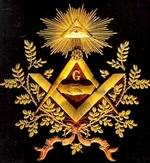 The Freemasons. One of the mottos in Freemasonry is "to perfect that which was left imperfect." This has a different meaning to the lowly initiates at the bottom of the proverbial pyramid, who merely serve, compared to what the adepts at the top of the pyramid believe. These adepts believe that the creator of the universe left the world -- including mankind itself -- in an imperfect state. Those at the top of the ladder, who run the stage show of consensus reality through their various levels of command and control, see themselves quite literally as Gods who, having reached perfection themselves, have the ability and natural right to shape and reshape the world according to their plan known as the "Great Work." They see themselves as re-creators, above and at odds with the true creator of the universe. The lesser-evolved types are seen as cannon-fodder, flowers that must be trampled, for the rebuilding of Solomon's (Sol-Om-On) Temple, which itself is esoteric allegory for The Great Work; the perfection; of mankind. Matter is put above creation, and science, (secular dogma) over faith, with the understanding that man can become God through study, the occult, and technocractic endevours and manipulations. The Freemasons. One of the mottos in Freemasonry is "to perfect that which was left imperfect." This has a different meaning to the lowly initiates at the bottom of the proverbial pyramid, who merely serve, compared to what the adepts at the top of the pyramid believe. These adepts believe that the creator of the universe left the world -- including mankind itself -- in an imperfect state. Those at the top of the ladder, who run the stage show of consensus reality through their various levels of command and control, see themselves quite literally as Gods who, having reached perfection themselves, have the ability and natural right to shape and reshape the world according to their plan known as the "Great Work." They see themselves as re-creators, above and at odds with the true creator of the universe. The lesser-evolved types are seen as cannon-fodder, flowers that must be trampled, for the rebuilding of Solomon's (Sol-Om-On) Temple, which itself is esoteric allegory for The Great Work; the perfection; of mankind. Matter is put above creation, and science, (secular dogma) over faith, with the understanding that man can become God through study, the occult, and technocractic endevours and manipulations.
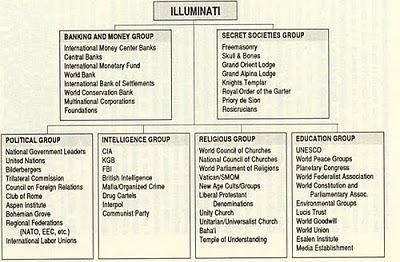 The Illuminati. The Illuminati is used nowadays to talk of several groups characterized by secrecy, all groups working together, having one single goal; that is Global Government. Historically however, it refers specifically to the Bavarian Illuminati founded on May 1, 1776, in Bavaria, by one Dr. Adam Weishaupt, a professor of Canon Law at Ingolstadt University and a former Jesuit. 0riginally, they were a secret society called the Order of the Illuminati formed within the existing Masonic lodges of Germany. Since Masonry is itself a secret society, the Illuminati was a secret society within a secret society, a mystery inside a mystery, so to say. Although the Order was founded to provide an opportunity for the free exchange of ideas, Weishaupt's background as a Jesuit seems to have influenced the actual character of the society, such that the express aim of this Order became to abolish Christianity, and overturn all civil government. So who are the Illuminati today? They are, in essence, a cartel of international bankers and industrialists based in Western Europe and North America. The names of certain families persist over long periods of time. Some of the most important names are Rothschild, Rockefeller, Morgan, Lazard, Warburg, Schroder and Schiff. They control world banks, movie industry, top corporations, CIA, United Nations, music industry, FBI, most television networks, global media, Vatican, other religions, Catholic Church, and of course, the education system. Their main goal is to create a One World Government and a "New World Order", with them on top. This is a very old goal of theirs, and to understand it fully, one must realize that this goal isn't of a kind that's supposed to be obtained within one lifetime; it has been a goal that slowly is to be reached over a long period of time. However, they have accomplished more in this direction during the last few decades than they have done in hundreds of years, due to industrialization and the Information Technology Era. This goal has been planned away from the public's prying eyes, in secrecy within the Secret Societies. All Secret Societies with secret grades of initiation are owned and controlled by the Illuminati, and Freemasonry is maybe the best known of them all. Their God is Lucifer, "The Light Bearer", and by occult practices they manipulate and influence the masses. It doesn't matter if you and I believe in this or not, as long as they do. And they take it very seriously.
The Antichrist And His Kingdom
Daniel 7: 7 And behold, a fourth beast, dreadful and terrible, exceedingly strong. It had huge iron teeth; it was devouring, breaking in pieces, and trampling the residue with its feet. It was different from all the beasts that were before it, and it had ten horns. 8 I was considering the horns, and there was another horn, a little one, coming up among them, before whom three of the first horns were plucked out by the roots. And there, in this horn, were eyes like the eyes of a man, and a mouth speaking pompous words. 23 The fourth beast shall be: a fourth kingdom on earth, which shall be different from all other kingdoms, and shall devour the whole earth, trample it and break it in pieces. Daniel 8: 23 ...When the transgressors are come to the full, a king of fierce countenance, and understanding dark sentences, shall stand up. Rev. 13: 4 And they worshipped the beast (Antichrist), saying, Who is like unto the beast? who is able to make war with him? 5 And there was given unto him a mouth speaking great things and blasphemies; and power was given unto him to continue forty and two months. (Midpoint Of Tribulation Period) 7 ... And power was given him over all kindreds, and tongues, and nations. 8 And all that dwell upon the earth shall worship him.
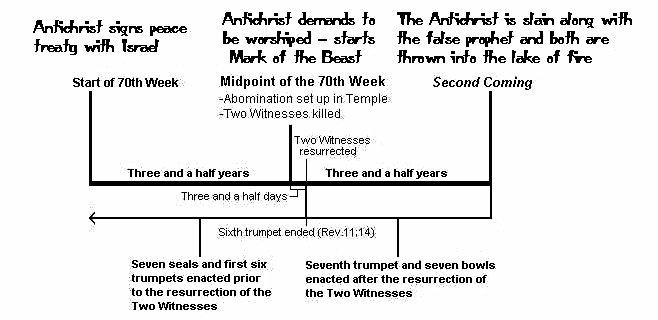
(The Tribulation Period - Final Seven Years)
The Man of Sin signs a peace covenant with Israel - this begins the tribulation period - the final seven years. 2 Thes. 2: 3 Let no one deceive you by any means; for that Day will not come unless the falling away comes first, and the man of sin is revealed, the son of perdition, 4 who opposes and exalts himself above all that is called God or that is worshiped, so that he sits as God in the temple of God, showing himself that he is God. And he shall confirm the covenant with many for one week (7 years) Daniel 9: 27
"Today, America would be outraged if U.N. troops entered Los Angeles to restore order [referring to the 1991 LA Riot]. Tomorrow they will be grateful! This is especially true if they were told that there were an outside threat from beyond, whether real or promulgated, that threatened our very existence. It is then that all peoples of the world will plead to deliver them from this evil. The one thing every man fears is the unknown. When presented with this *scenario*, individual rights will be willingly relinquished for the guarantee of their well-being granted to them by the World Government." Dr. Henry Kissinger, Bilderberger Conference, Evians, France, 1991
|
CyberExtruder Gets 2D to 3D Face Patent
CyberExtruder announced that the company had been granted a new patent on their process for creating reliable 3D models of a person's face from a single or series of 2D images.
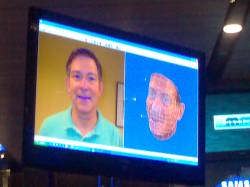
CyberExtruder's 2D-to-3D conversion is certainly an important innovation to the security and biometrics technology industries. Why? It enables better matching between offline photographs and surveillance video. While the matching of "watch list" images against surveillance video has traditionally achieved mixed results as a result of inadequate lighting, angle, expression, etc., this patent could signify a leap forward in terms of the quality and value of 3D facial images.
Tasers
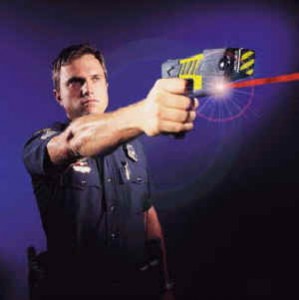 "Taser" is an acronym for "Thomas A. Swift's Electric Rifle," a reference to juvenile adventure book character Tom Swift. A taser is a weapon that shoots two dart-like electrodes at its victims, then sending electric shocks through wire intended to stun a victim into submission, rendering him helpless and able to be controlled without excessive force. When the Taser electroshock weapon was introduced into widespread use in the early 1990s, it was touted as a "non-lethal" alternative to firearms, to be used to subdue criminals in situations that did not warrant the use of a deadly weapon. However, though the manufacturer as well as many law enforcement agencies continue to argue that tasers have reduced the need for officers to draw firearms and therefore resulted in fewer deaths, many civil rights groups and concerned citizens point to the more than 200 deaths that have resulted from tasers used by law enforcement officers as evidence that tasers are taking lives. One of the contributing factors to these taser injuries and taser deaths is the increasing use of tasers to subdue people who are not a serious threat to law enforcement officers. Instead of being used only in situations in which firearms would be used, tasers are more and more frequently used to simply subdue criminals in any kind of arrest situation. Officers may be subject to laws governing excessive force and police brutality because they sometimes risk lives unnecessarily when using tasers. Further, the news over the past few years has offered verifiable reports of police officers using tasers on individuals who are handicapped, pregnant, mentally-disabled or non-English-speaking, in addition to those who were simply objecting to an officer's aggression or inability to explain details of an arrest. The rise of cell phone camera technology and Internet video databases such as YouTube and LiveLeak has given the public more opportunity than ever to capture and display videos of taser incidents that are often astonishingly graphic.
Video surveillance gets smarter in Verbania, Italy
Verbania, the capital of the province of Verbano-Cusio-Ossola, Italy, was created when the towns of Intra and Pallanza merged. As one of the most idyllic and famous tourist destinations on Lake Maggiore, the town relies heavily on holidaymakers to fill its streets and generate income. To ensure the safety of visitors and citizens, the town council decided to launch a community surveillance project based on a system of network cameras.
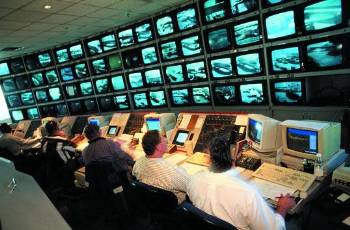
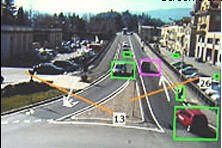 Monitors linked to the ten Sony SSNC-RX550 network cameras are installed in the Verbania Municipal Police control room, which is currently undergoing restructuring. Even so, the system does not require the intervention of dedicated security operatives. The human element only comes into play when real-time monitoring is needed (for example during a major event), or when an automatic alarm is triggered. Monitors linked to the ten Sony SSNC-RX550 network cameras are installed in the Verbania Municipal Police control room, which is currently undergoing restructuring. Even so, the system does not require the intervention of dedicated security operatives. The human element only comes into play when real-time monitoring is needed (for example during a major event), or when an automatic alarm is triggered.
The town's network cameras have been positioned so that they can monitor all arrival and escape points in every area of the town. Intelligent image analysis functions now enable allow the city to keep special areas such as no-stopping zones under control. Using these features, live images can be monitored in unattended mode until suspicious activity occurs, at which point the operator is proactively alerted to the threat by means of an appropriate alarm. |
"We are on the verge of a global transformation. All we need is the right major crisis and the nations will accept the New World Order." David Rockefeller speaking at the UN, Sept. 14, 1994
|
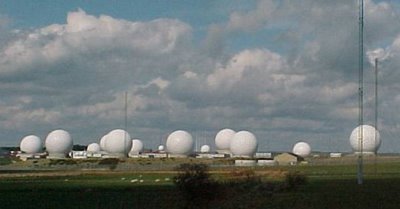 Echelon (Signals Intelligence) Echelon (Signals Intelligence)
"Trillions of bytes of textual archive and thousands of online users, or gigabytes of live data stream per day that are filtered against tens of thousands of complex interest profiles" Echelon is a system used by the United States National Security Agency (NSA) to intercept and process international communications passing via communications satellites. It is one part of a global surveillance systems that intercept messages from the Internet, from undersea cables, from radio transmissions, from secret equipment installed inside embassies, or use orbiting satellites to monitor signals anywhere on the earth's surface. The system includes stations run by Britain, Canada, Australia and New Zealand, in addition to those operated by the United States. They all form part of the same integrated global network using the same equipment and methods to extract information and intelligence illicitly from millions of messages every day, all over the world. The system works by indiscriminately intercepting very large quantities of communications and using computers to identify and extract messages of interest from the mass of unwanted ones. A chain of secret interception facilities has been established around the world to tap into all the major components of the international telecommunications networks. Some monitor communications satellites, others land-based communications networks, and others radio communications. ECHELON links together all these facilities, providing the US and its allies with the ability to intercept a large proportion of the communications on the planet. The computers at each station in the ECHELON network automatically search through the millions of messages intercepted for ones containing pre-programmed keywords. The thousands of simultaneous messages are read in "real time" as they pour into the station, hour after hour, day after day, as the computer finds intelligence needles in telecommunications haystacks. According to its website, the USA's National Security Agency is "a high technology organization... on the frontiers of communications and data processing". Russia, China, France and other nations also operate worldwide networks.
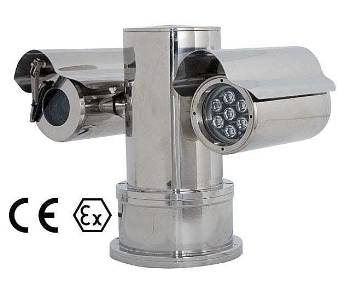 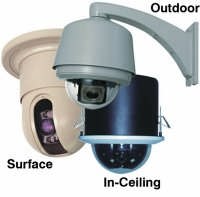
CCTV Security Cameras An explosion proof camera and various dome mounted cameras are pictured above. CCTV is an acronym that stands for Closed Circuit Television. It is defined as the use of one or more cameras used for surveillance purposes. It was initially developed to increase bank security and has since spread to every corner of the security industry. Home security systems, businesses, corporations, organizations, and schools are several examples of locations that implement CCTV Security Systems. They produce high quality, exceptionally sharp color images, and have motion sensors that track movement across an area. They can pick a person out of a crowd and lock on them, tracing their movements; they can run at night because of infrared technology. The possibilities are endless for CCTV, especially as the technology continues to develop.
|
|
Globalization & A
One World Economy
Corporate citizenship in the world economy. Transnational Corporations exert a great deal of power in the
globalized world economy. Many corporations are richer and more powerful than the states that seek to regulate them.
Through mergers and acquisitions corporations have been growing very rapidly and some of the largest TNCs now have
annual profits exceeding the GDPs of many low and medium income countries.
|
Welcome To The New World Order
"The technotronic era involves the gradual appearance of a
more controlled society. Such a society would be dominated
by an elite, unrestrained by traditional values. Soon it will be
possible to assert almost continuous surveillance over every
citizen and maintain up-to-date complete files containing
even the most personal information about the citizen. These
files will be subject to instantaneous retrieval by the
authorities." Zbigniew Brzezinski. founder of The Trilateral
Commission
One World Worship: The False Prophet's Final Stage
"And upon her forehead was a name written, MYSTERY, BABYLON THE GREAT, THE MOTHER OF HARLOTS AND ABOMINATIONS OF THE EARTH". (Revelation 17:5) What will be the final form of Babylon the Great? We can be sure that the Whore:
(1) Will be personified as "the False Prophet" (Revelation 16:13). Since Babylon the Great only rides the Beast, i.e., "I saw a woman sit upon a scarlet coloured beast [the Antichrist]" (17:3), she is not to be confused with the Beast himself. Her intimacy with the Beast stems from her need for the governmental power of the Beast to assure her a monopolistic religious franchise, i.e., "as many as would not worship the image of the Beast should be killed" (13:15).
(2) Will promote the worship of the Antichrist., i.e., Babylon the Great "exerciseth all the power of the first beast [the Antichrist] before him, and causeth the Earth and them which dwell therein to worship the first beast, whose deadly wound was healed" (Revelation 13:12).
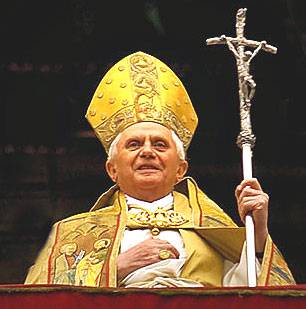
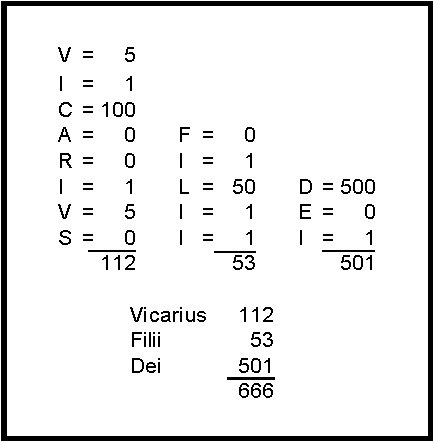 The official title of the pope is Vicarius Filii Dei, Vicar of the Son of God.
Babylon the Great's ingenious device will be forcing the world to take the Mark of the Beast, which assures the participation of every human being in the religion of Babylon the Great, in exchange for life and its physical necessities. "16 And [the False Prophet] causeth all, both small and great, rich and poor, free and bond, to receive a mark in their right hand, or in their foreheads: 17 and that no man might buy or sell, save he that had the mark, or the name of the beast, or the number of his name" (13:16-17).
(3) Will spiritually fornicate with the kings of the Earth, i.e., "With whom the kings of the Earth have committed fornication, and the inhabitants of the Earth have been made drunk with the wine of her fornication" (17:2), because, as with the Antichrist, she needs their help to force her religion upon the world.
(4) Will be blasphemous, i.e., "And [Babylon the Great] had power to give life unto the image of the Beast, that the image of the Beast should both speak... full of names of blasphemy" (13:15; 17:3). "
(5) Will be materially rich, i.e., "And the woman was arrayed in purple and scarlet colour, and decked with gold and precious stones and pearls, having a golden cup in her hand full of abominations and filthiness of her fornication" (Revelation 17:4).
(6) Will be a murderer of the True Saints, i.e., "And I saw the woman drunken with the blood of the Saints, and with the blood of the Martyrs of Jesus" (Revelation 17:6).
(7) Will reign over the people of the world, i.e., the "inhabitants of the Earth have been made drunk with the wine of her fornication... The waters which thou sawest, where the Whore sitteth, are peoples, and multitudes, and nations, and tongues" (Revelation 17:2, 15).
(8) Will be characterized as a city, i.e., "And the woman which thou sawest is that great city, which reigneth over the kings of the Earth" (Revelation 17:18). No other city in the world has ever been celebrated, as the city of Rome has, for its situation on seven hills.
(9) Will be destroyed by the Antichrist, i.e., "And the ten horns which thou sawest upon the Beast, these shall hate the Whore, and shall make her desolate and naked, and shall eat her flesh, and burn her with fire" (Revelation 17:16).
(10) Will be judged by the Almighty God. i.e., "For God hath put in their hearts to fulfil His will, and to agree, and give their kingdom unto the Beast, until the words of God shall be fulfilled" (Revelation 17:17).
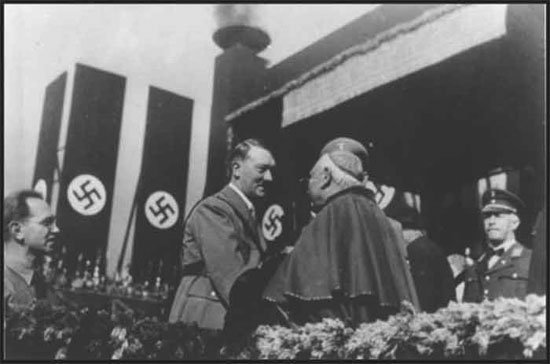
Hitler was backed and supported by the Catholic Church as will the coming
Antichrist "I am now as before a Catholic and will always remain so"
Adolph Hitler, to Gen. Gerhard Engel, 1941
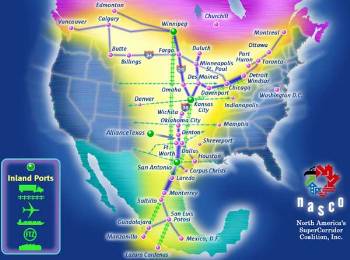
NAFTA Super Highway
The North American Union
Thomas Donohue (president and CEO of the U.S. Chamber of Commerce) on June 16, 2006 remarked that "for CEOs, North America is already a single market, and business decisions are no longer made with a Mexico strategy---or a Canada strategy---but, rather, with a North American strategy....I think it's pretty clear now that it no longer makes sense to talk about U.S. competitiveness and Mexican competitiveness---or, for that matter, about the competitiveness of Canada. We are all in this together---we, as North Americans."
UN report calls for new global reserve currency to replace US dollar - September 7, 2009
UN Says New Currency Is Needed to Fix Broken Confidence Game. The dollars role in international trade should be reduced by establishing a new currency to protect emerging markets from the confidence games of financial speculation, the United Nations said.
UN countries should agree on the creation of a global reserve bank to issue the currency and to monitor the national exchange rates of its members, the Geneva-based UN Conference on Trade and Development said today in a report.
China, India, Brazil and Russia this year called for a replacement to the dollar as the main reserve currency after the financial crisis sparked by the collapse of the U.S. mortgage market led to the worst global recession since World War II. China, the world's largest holder of dollar reserves, said a supranational currency such as the International Monetary Funds special drawing rights, or SDRs, may add stability.
Theres a much better chance of achieving a stable pattern of exchange rates in a multilaterally-agreed framework for exchange-rate management, Heiner Flassbeck, co-author of the report and a UNCTAD director, said in an interview from Geneva. an initiative equivalent to Bretton Woods or the European Monetary System is needed.
The 1944 Bretton Woods agreement created the modern global economic system and institutions including the IMF and World Bank.
Enhanced SDRs
While it would be desirable to strengthen SDRs, a unit of account based on a basket of currencies, it wouldn't be enough to aid emerging markets most in need of liquidity, said Flassbeck, a former German deputy finance minister who worked in 1997-1998 with then U.S. Deputy Treasury Secretary Lawrence Summers to contain the Asian financial crisis.
Emerging-market countries are underrepresented at the IMF, hindering the effectiveness of enhanced SDR allocations, the UN said. An organization should be created to manage real exchange rates between countries measured by purchasing power and adjusted to inflation differentials and development levels, it said.
The most important lesson of the global crisis is that financial markets get prices right, Flassbeck said. governments are being tempted by the resulting confidence game catering to financial-market participants who have shown they are inept at assessing risk.
The 45-year-old UN group, run by former World Trade Organization chief Supachai Panitchpakdi, promotes integration of developing countries in the world economy, according to its Web site. Emerging-market nations should consider restricting capital mobility until a new system is in place, the group said.
The world body began issuing warnings in 2006 about financial imbalances leading to a global recession.
|
|
 |
Face
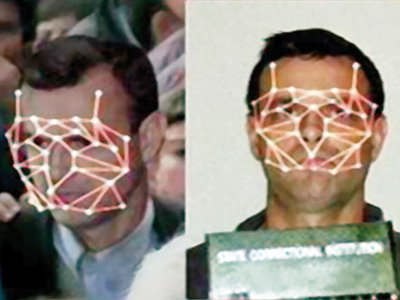
Scan A computer that could recognize faces as readily as people can and would make the ideal aid for spotting and tracking known terrorists and criminals on streets or in transportation stations. But face-recognition systems aren't as reliable as law-enforcement officials would like. Identix (IDNX) and other suppliers are making steady progress. Identix says that, by combining the usual face scan with an inspection of pores and wrinkles in small blocks of skin, reliability is improved by at least 25%, to better than 90%.
| |
|
| |
Iris Scan
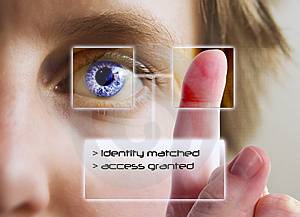
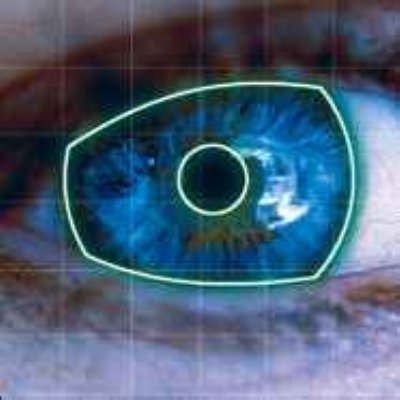
The Eyes Have It. Probably the most foolproof biometric measure is the eye's iris. Its complex pattern of zigzagging lines and random dots is much more distinctive than the whorls of a
fingerprint. In fact, because authorities in a few foreign countries are confident that iris scans can't be circumvented, they're starting to allow airlines to use iris scanning at selected airports. If people register their iris scans, they can bypass the usual security check. Currently, a person's eye must be in close to the scanner. Intelligence and law-enforcement agencies hope that some way can be found to scan irises from a distance -- or even to spot a suspect in a crowd.
|
| |
|
|
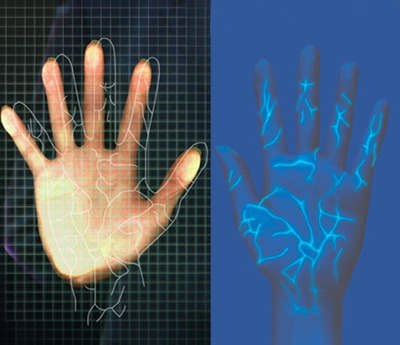
Peering Beneath the Skin Like that of a fingerprint, the pattern of blood veins in the palm is unique to every individual. Unlike a fingerprint, however, the palm has a biometric pattern that is virtually impossible to duplicate. So Fujitsu developed a palm reader that checks the blood vessels under the skin -- and people don't even have to touch the device. That alleviates concerns about hygiene, especially in hospitals, where many people touch the same biometric sensors to gain access to a room or storage cabinet.
|
|
|
Prepare To Be Scanned
The Economist, Dec. 4th 2003
Biometrics: High-tech security systems that rely on detailed measurements of the human body, known as biometrics, are taking off. But should they be?
IT HAS been a long time coming. But after years of false starts, security systems based on biometrics human characteristics such as faces, hand shapes and fingerprints are finally taking off. Proponents have long argued that because biometrics cannot be forgotten, like a password, or lost or stolen, like a key or an identity card, they are an ideal way to control access to computer networks, airport service-areas and bank vaults.
But biometrics have not yet spread beyond such niche markets, for two main reasons. The first is the unease they can inspire among users. Many people would prefer not to have to submit their eyes for scanning in order to withdraw money from a cash dispenser. The second reason is cost: biometric systems are expensive compared with other security measures, such as passwords and personal identification numbers. So while biometrics may provide extra security, the costs currently outweigh the benefits in most cases.
In the wake of the terrorist attacks of September 11th 2001, however, these objections have been swept aside. After all, if you are already being forced to remove your shoes at the airport, and submit your laptop for explosives testing, surely you will not object to having your fingers scanned too? The desire to tighten security in every way possible, particularly in America, also means the funds are being made available to deploy technology that was previously regarded as too expensive to bother with.
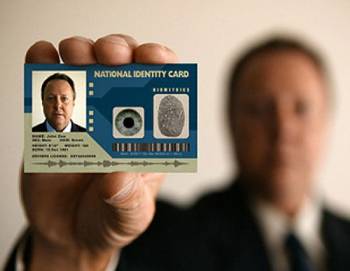
As a result, biometrics are suddenly about to become far more widespread. America will begin using biometrics at its airports and seaports on January 5th. Under the new US-VISIT programme, all foreigners entering on visas will have their hands and faces digitally scanned. This will create what Tom Ridge, America's homeland-security supremo, calls an electronic check-in and check-out system for foreign nationals. American citizens will also be affected, as new passports with a chip that contains biometric data are issued from next year. And the new rules specify that by October 26th 2004, all countries whose nationals can enter America without a visa including western European countries, Japan and Australia must begin issuing passports that contain biometric data too. Moves to create a European standard for biometric passports are already under way, and many other countries are following suit: Oman and the United Arab Emirates, among others, will begin issuing national identity cards containing biometrics next year. Britain's planned new national identity card will also include biometrics.
In other words, governments either do not believe that the costs of biometrics still outweigh any potential benefits or, more likely, fearing more terrorism they simply do not care. This could be an expensive choice. Recent reports from groups such as the General Accounting Office (GAO), the investigative arm of America's Congress, and America's National Academy of Science (NAS), point out that, while the political environment has changed, the technology has not. Biometrics still do not work well enough to be effective for many of the applications in which they are now being deployed.
Even John Siedlarz, who co-founded the International Biometrics Industry Association to promote the sale and use of the technology, says that recent congressional requirements are premature in my view. Despite this concern from industry experts, politicians are keen to push onwards, and not only in America. Otto Schily, Germany's interior minister, recently declared his support for increased use of biometrics, asking: How else would you propose to improve security? Similarly, America's Justice Department responded to a recent GAO report by saying that the government is in a hurry to deploy biometrics so why couldn't the GAO just get on board? It is difficult to avoid the conclusion that the chief motivation for deploying biometrics is not so much to provide security, but to provide the appearance of security. (This ends the first section of this article. The rest is continued here - Link to article)
Biometric Examples:
|
|
|
|
|
|